

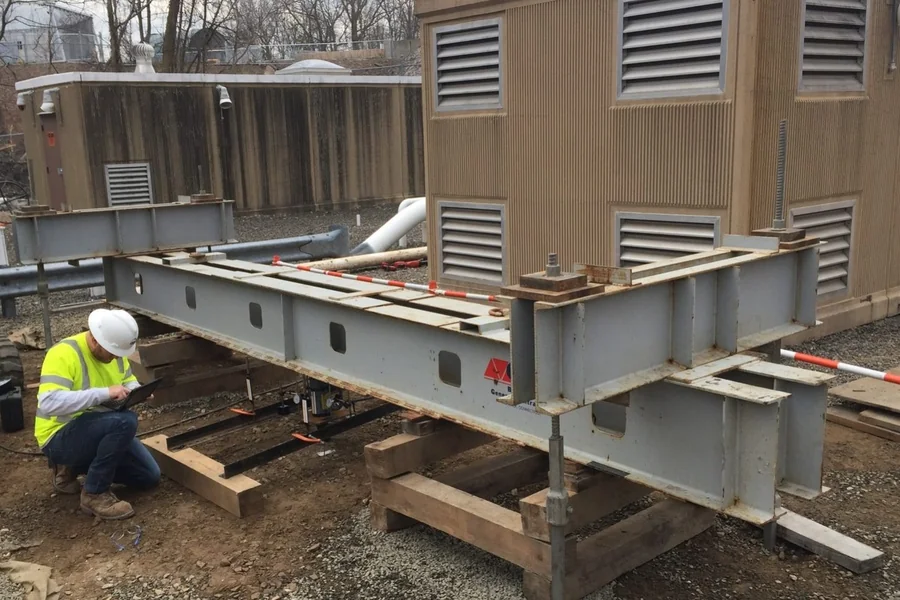
Before a single brick is laid, savvy builders put a new home’s bones through a stress workout called load testing. Think of it as a “bench-press session” for soil, piers, and slabs: engineers stack weight, measure how the ground fights back, and decide whether your future living room can handle everything from vintage pianos to epic family reunions.
By revealing hidden weaknesses early, load testing saves homeowners from hair-raising cracks and budget-blowing repairs down the road.
What Is Load Testing?
Load testing is the deliberate application of controlled weight to the soil or support elements beneath a planned or existing structure. Unlike computer simulations, this exercise delivers raw, real-world data about how much force the site can handle before it starts to settle or shift. Engineers typically place calibrated hydraulic jacks, steel plates, or stacked concrete blocks on the test area, then record movement with dial gauges sensitive enough to notice a change thinner than a credit card.
These readings expose whether the soil maintains its shape (elastic behavior) or creeps under pressure (plastic behavior). In practical terms, load testing answers the million-dollar question: “Will this lot keep my house perfectly level for decades, or turn it into a funhouse over time?”
How Engineers Perform Load Tests
Most residential projects use either plate load tests or pile load tests. For a plate load test, crews excavate to the intended foundation depth, set a rigid steel plate (often 30–75 cm in diameter), and incrementally increase the applied load through hydraulic rams. Each load step is held until movement stops, and the settlement curve is plotted against the pressure applied. If the curve stays nearly flat, the soil is a champ. If it suddenly bends, the ground might need reinforcement or a deeper foundation.
For pile load tests, contractors drive a test pile to the planned depth, attach load cells, and apply vertical force while monitoring deflection. All the while, engineers log moisture, temperature, and time, because clay behaves very differently on a dry summer afternoon than after a monsoon downpour. The whole process looks geeky, yet it is surprisingly quick—a typical single-family load test wraps up in a day, leaving neighbors curious but not cranky.
Benefits of Load Testing for Homeowners
Skipping load testing to save a few pesos often leads to five-digit repair bills later. Proper tests let engineers choose the most cost-effective foundation type and depth, avoiding over-engineering as much as under-engineering. They also pinpoint zones of variable soil strength so builders can switch from shallow footings to deep piles only where truly necessary. For resale value, a certified load-test report is gold: buyers gain confidence that the house sits on solid ground—literally.
Insurance companies may even offer sweeter premiums because verified soil capacity lowers the risk of structural claims. Finally, knowing the limits of the site helps future-proof the property; you can add a second-story sunroom or install rooftop solar panels without worrying that extra weight will trigger a slanted floor saga.
Integrating Load Testing into Modern Foundation Design
Today’s architects use load-test data to model entire support systems, from traditional mat slabs to pier & beam foundations, inside advanced structural software. The numbers feed algorithms that optimize footing size, rebar spacing, and concrete strength, shaving tons of material waste while boosting safety margins. Builders then schedule follow-up spot checks during construction, verifying that the real-world behavior still matches the test results after excavation, backfilling, and rain exposure.
Municipal inspectors often accept certified load-test reports as proof of compliance with stringent building codes, accelerating permit approvals and trimming costly project delays. In short, load testing has evolved from a niche geotechnical procedure into a cornerstone of smart, sustainable homebuilding—one that turns the invisible earth beneath your feet into a transparent and predictable partner.
Conclusion
A strong home foundation is more than concrete and steel; it is the sum of meticulous measurements taken before ground is broken. Load testing gives those measurements teeth, exposing weak soils, confirming safe bearing capacities, and guiding every structural decision that follows. The modest investment in a one-day test delivers decades of peace of mind, proving that a house built on solid data truly becomes a home built to last.
