

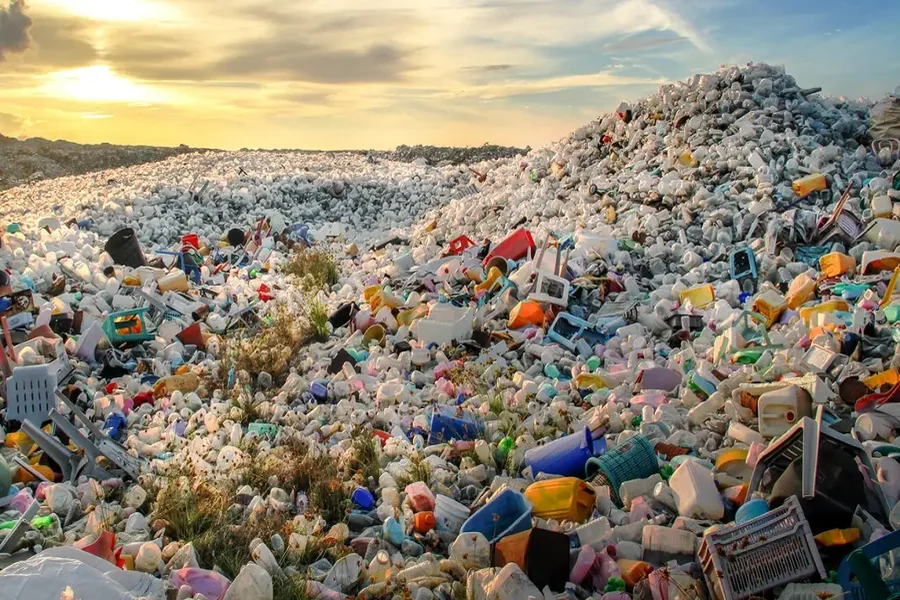
Ask someone to picture a gold mine and they’ll describe a pit, heavy trucks, and a stretch of desert. The richest deposits sitting around today look nothing like that. They look like old phones in a drawer, dead laptops stacked behind an office, and gray ponds of leftover sludge behind a factory fence.
So why is nobody digging into them?
The Junk Drawer Is a Metal Deposit
Electronics get tossed out faster than anyone can recycle them. According to a UN release, the world generated 62 million tonnes of e-waste in 2022, and less than a quarter of it was documented as properly collected and recycled, leaving about US$62 billion in recoverable natural resources unaccounted for.
The same report puts the value of metals embedded in that year of e-waste at roughly US$91 billion, with copper alone accounting for about US$19 billion.
That’s not a rounding error. It’s a mountain of copper, gold, aluminum, and rare earths sitting in landfills, garages, and shipping containers.
Recycling recovers only a sliver of what’s needed. Most rare earth demand is still met by fresh extraction, not by pulling material back out of end-of-life electronics.
The Tailings Nobody Wants to Talk About
Mining leaves behind a second pile that rarely gets discussed: tailings. These are the crushed leftovers after the target metal is pulled out. Historically, they were treated as waste.
That framing is outdated. Many of the metals modern electronics depend on aren’t mined on purpose in the first place. One 2015 study found that roughly 61% of evaluated metals and metalloids come out of the ground largely as byproducts of other host metals, meaning their supply is tied to whatever the primary mine happens to be producing. The leftovers often carry more strategic value than the original ore.
Phosphate fertilizer waste is a good example. Florida holds enormous stacks of phosphogypsum that contain measurable quantities of rare earth elements, with millions more tons produced each year.
Why This Matters Beyond the Mining Industry
Recovering material from waste isn’t only a supply story. It’s a climate story. The same UN analysis estimates that documented e-waste recycling in 2022 avoided hundreds of millions of tonnes of primary ore extraction and prevented tens of millions of tonnes of CO2-equivalent emissions.
The catch is that waste streams are messy. Metals sit in low concentrations, mixed with plastics, ceramics, sulfates, and dirt. Pulling anything valuable out takes specialized processing, not a bigger shovel.
That’s where ceramic processing techniques get interesting. The same milling, calcining, and firing steps used to turn raw powders into engineered ceramics also work for concentrating and stabilizing minerals from tailings, ash, and industrial residues. Waste that used to sit in a pond can become a feedstock.
The Shift Is Already Happening
A few forces are pushing this forward:
- Supply anxiety. Governments want domestic sources for the metals inside batteries, magnets, and chips.
- Environmental pressure. Tailings ponds and gypsum stacks are liabilities. Turning them into products reduces cleanup risk.
- Better chemistry. Separation and thermal processing techniques keep improving, making low-grade waste economically viable.
Most people assume value comes from digging deeper. In reality, it comes from looking closer at what’s already been dug up. The junkyard, the phone drawer, and the fenced-off pond behind the factory are starting to look less like problems and more like inventory.
