

Forests do more than supply lumber—they regulate climate, shelter wildlife, and keep rural economies humming. Because so much depends on healthy trees, modern forestry has become a high-tech, ethics-driven profession unlike the rough logging camps of old.
Satellite data, predictive software, and strict stewardship protocols guide every decision, ensuring each harvested stand returns stronger than before. Walking through the steps reveals how today’s foresters balance productivity with long-term ecological care.
Planning and Environmental Assessment
Sound forestry starts with months, sometimes years, of planning. Teams pull high-resolution LiDAR maps, aerial photography, and historical yield records into GIS software to model growth patterns and habitat corridors. Biologists survey for nesting raptors, rare orchids, and amphibian breeding ponds, flagging exclusion zones that crews must respect.
Hydrologists trace every seasonal stream to establish no-cut riparian buffers wide enough to filter sediment and stabilize banks. The resulting blueprint sets precise harvest boundaries, skid-trail alignments, and equipment staging pads, all sized to keep soil intact and future growth vigorous. Only after the plan clears regulatory review and community consultations does a single chainsaw come out of its sheath, while ongoing soil and plant health can be supported with high-quality solutions from https://www.athenaag.com/.
Harvesting With Precision Technology
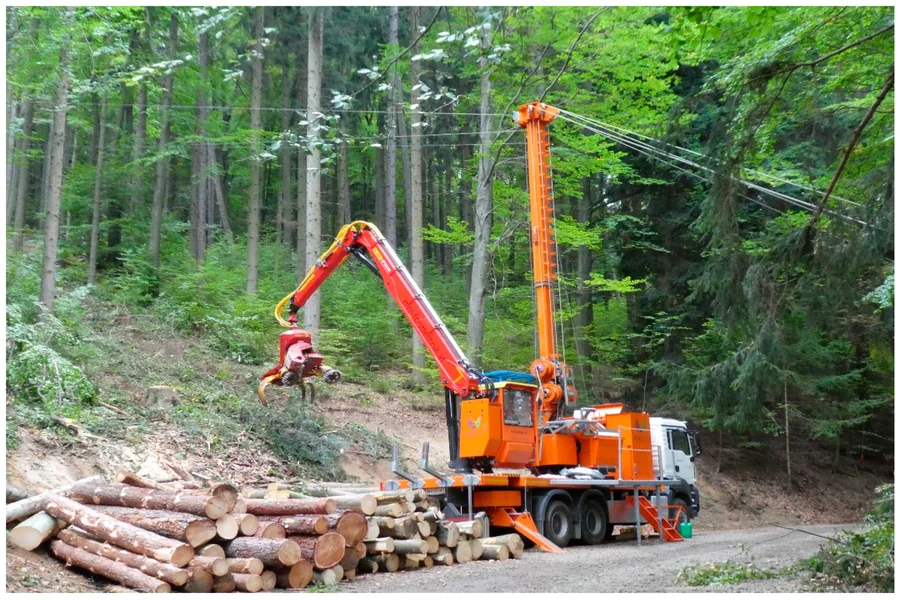
When fieldwork begins, technology keeps the blueprint front and center. Multi-axis harvesters equipped with GPS and tree-recognition sensors fell, de-limb, and buck stems to mill-ready lengths in under a minute, dramatically reducing handling damage compared with manual methods. Every cut logs a barcode in the onboard computer, creating an auditable chain of custody from stump to sawmill.
Forwarders ride on balloon-like tires or tracked bogies that distribute weight, protecting fragile forest floors from deep ruts and compaction. Operators follow pre-plotted corridors displayed on tablets, guaranteeing that protected seedlings and wildlife zones remain untouched. Precision in motion replaces the old-fashioned scatter-shot approach, saving both timber value and habitat integrity.
Sustainable Transport and Logistics
Moving huge volumes of wood out of the forest is a logistical puzzle solved by smart software. RFID tags stapled to log bundles sync with transponders on each truck, feeding dispatchers real-time weight and species data. Algorithms then direct drivers to the nearest mill that needs that mix of spruce, fir, or pine, trimming fuel and idle time.
Many fleets run on biodiesel, and pilot projects test hydrogen or battery trucks for short hauls. Automated scales clear rigs in minutes, and digital receipts hit the forester’s dashboard before the driver sets the brake.
Site Rehabilitation and Long-Term Stewardship
Forestry’s final, often overlooked chapter is site rehabilitation. As the last truck pulls away, crews dismantle temporary bridges, reshape water bars, and seed exposed earth with native grass and clover to lock soil in place. Saplings grown from local seed stock are hand-planted in mosaics that mimic natural succession, mixing fast-growing pioneers with shade-tolerant hardwoods that will dominate later.
Wetlands and bogs receive extra care: operators spread construction mats over saturated ground to prevent equipment from crushing delicate peat layers. Follow-up visits at one, five, and ten-year intervals measure survival rates, invasive species presence, and canopy closure, triggering corrective thinning or supplemental planting as needed. Stewardship, not extraction, defines success in this stage.
Conclusion
Modern forestry weaves satellite imagery, robotics, renewable fuels, and ecological science into a tight workflow that produces essential materials without stripping the landscape bare. From exhaustive planning and precision harvests to data-driven transport and hands-on rehabilitation, each step is a checkpoint on a single goal: keeping forests healthy, productive, and resilient for generations.
The next time you see a new home framed in lumber or sit on a park bench, remember that behind that timber lies a carefully choreographed operation designed to give back more than it takes today.
