

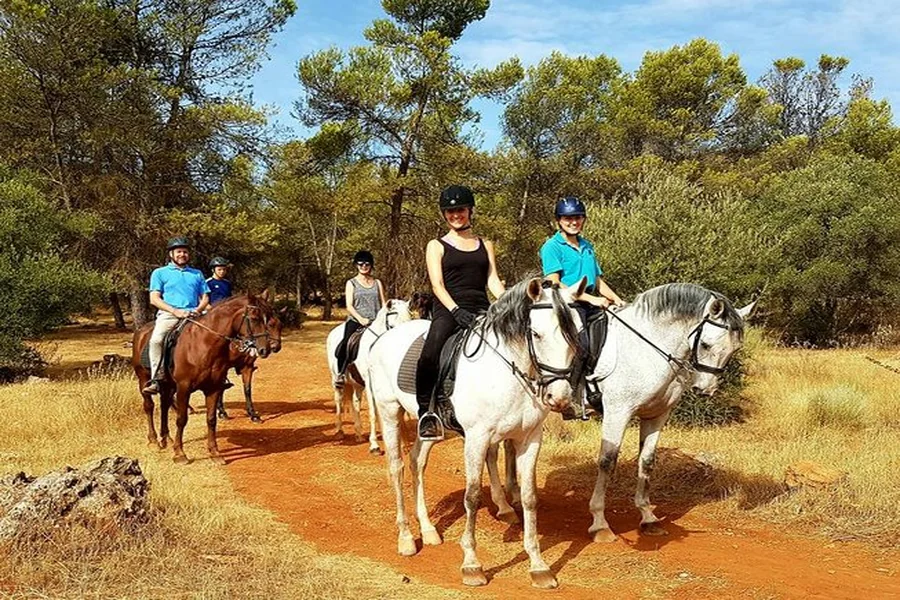
There’s a reason horseback riding consistently appears on people’s bucket lists. It’s physical without being punishing, immersive without requiring technical skill, and the experience of moving through open landscape on the back of a horse is simply unlike anything else you can do outdoors. If you’ve been curious but haven’t taken the first step yet, this guide is for you.
Getting started is more straightforward than most beginners expect. You don’t need prior experience, special fitness, or expensive gear. What you need is a basic understanding of what to expect, a good operator, and a willingness to relax and follow your instructor’s lead.
Two Ways to Start
Most beginners fall into one of two categories: those who want a scenic trail experience, and those who want to actually learn to ride. A guided trail ride is the most accessible entry point. You’re matched with a calm horse, shown the basics of steering and posture, and taken out with a guide leading the way. For most first-timers, this is the right starting point.
If you want to develop real riding skills, arena lessons are the path forward. You’ll learn to control the horse at different gaits and build the muscle memory that trail riding alone won’t give you. Many riders do both: a trail ride to fall in love with the activity, then lessons to take it further.
What to Wear
Clothing matters more than most beginners expect. Long pants are non-negotiable. The saddle will rub bare skin raw quickly, and fitted pants work better than loose ones since extra fabric bunches under your legs. Dedicated riding breeches are comfortable and inexpensive if you plan to ride regularly, but regular jeans are perfectly fine for a first outing.
Footwear is the other critical detail. You need a closed-toe shoe with a defined heel of at least half an inch. The heel stops your foot from sliding through the stirrup, which is a genuine safety consideration. Riding boots are ideal, but a sturdy ankle boot with a modest heel does the job. Avoid flat-soled sneakers and anything open-toed.
Keep upper layers fitted and close to the body. Loose scarves and open jackets that catch the wind can startle a horse. A zip-up jacket over a fitted shirt is all you need. Most reputable stables provide helmets, but call ahead if you’d prefer to bring your own.
Understanding Horses Before You Mount
You don’t need to be an animal expert to handle yourself well around horses. A few basics go a long way. Horses are prey animals, hardwired to notice sudden movement and unexpected sounds. Slow, deliberate movements and a calm voice put a horse at ease far more effectively than any technique.
When approaching, come from the side, let the horse see you coming, speak quietly, and offer the back of your hand to sniff before touching the neck. Horses read body language with remarkable sensitivity, and the calm you project in those first moments tends to carry through the rest of the ride. Your instructor will walk you through the specifics, but steady movements and gentle signals apply universally.
Mounting and Getting Comfortable in the Saddle
Mounting is straightforward once you’ve seen it done. Stand on the horse’s left side, place your left foot in the stirrup, grip the saddle horn with both hands, and push off the ground to swing your right leg over. Your instructor will hold the horse steady. It feels awkward the first time and natural by the third.
Once seated, focus on posture. Sit tall with your weight dropped down through your heels. Shoulders back, eyes forward, hips relaxed. That last part is the hardest for beginners. The instinct is to tense up against the movement of the horse, but relaxing into it is both more comfortable and more effective. A stiff rider is harder to balance than a loose one, for both the rider and the horse.
Basic Controls and Communication
Horses respond to three types of signals: rein pressure, leg pressure, and weight shifts. For a beginner, reins and basic leg cues are the most important to understand.
Reins steer and slow the horse. Gentle, steady pressure on both reins signals the horse to slow or stop. Right rein turns right, left rein turns left. The key word is gentle. New riders often pull too hard, which creates tension and produces the opposite of the intended effect. Think of the reins as a conversation, not a command. Light leg pressure asks the horse to walk on or maintain pace. Your instructor will demonstrate this before you head out, and on most beginner group rides the horses follow a lead horse, which reduces how much independent steering you need to do.
Your First Trail Ride: What to Expect
A beginner trail ride typically runs one to two hours at a walking pace. The walk is a smooth, four-beat gait. Once you stop bracing against it and start moving with the horse, it becomes genuinely comfortable. By the halfway point most beginners have forgotten to be nervous entirely.
Your guide will ride at the front and set the pace. Ask questions throughout. Good guides want you to understand what’s happening and will explain why the horse does what it does. If something feels off, say so. Adjusting stirrups or repositioning your seat mid-ride is completely normal.
When searching for trail riding near me, look for operators who mention beginner-specific routes and small group sizes. A group of four or five riders gets more attention from the guide than a group of fifteen, and that difference shows up clearly in the experience.
Choosing the Right Place to Start
The operator matters at least as much as the location. A well-run stable will match you to the right horse, give you a proper orientation before mounting, and send you out with a guide who checks in throughout rather than just leading in silence. Reviews specifically mentioning first-time experiences are the most reliable signal of quality.
Ask a few questions before booking: How long is the ride? How many riders per group? What experience level are the horses used for beginners? Any reputable operator will answer directly. If a stable is vague about group size or dismissive about safety gear, find a different one.
If you’re in Southern California, searching for horseback riding near me will surface options across varying terrain, from coastal trails to inland backcountry routes. The variety in this region is genuinely excellent for first-time riders.
After Your First Ride: What Comes Next
Expect mild soreness in the inner thighs and lower back, especially if you tensed up. It passes quickly and is less noticeable each time you ride. The more immediate thing most beginners notice is the post-ride calm: quiet and settled, fading slowly over a few hours, leaving most people already thinking about when they can go back.
If the experience sparked genuine interest, structured lessons are the natural next step. Even four or five arena sessions build the foundation that makes all future riding more comfortable. Horseback riding rewards patience more than athletic ability. The riders who progress fastest are the ones who stay calm, listen carefully, and show up regularly.
