

Why Stability Has Quietly Overtaken Speed
In technology discussions, speed usually gets all the attention. Every new generation of Ethernet brings higher numbers and bigger promises. Yet inside production networks, speed is only one part of the equation. Stability often matters more.
For many organizations, the most painful outages are not caused by bandwidth shortages. They come from unexpected behavior, interoperability quirks, or small physical issues that spiral into larger failures. This is one reason why 40GBASE-LR4 continues to appear in new projects long after faster options became available.
What Makes 40GBASE-LR4 Predictable
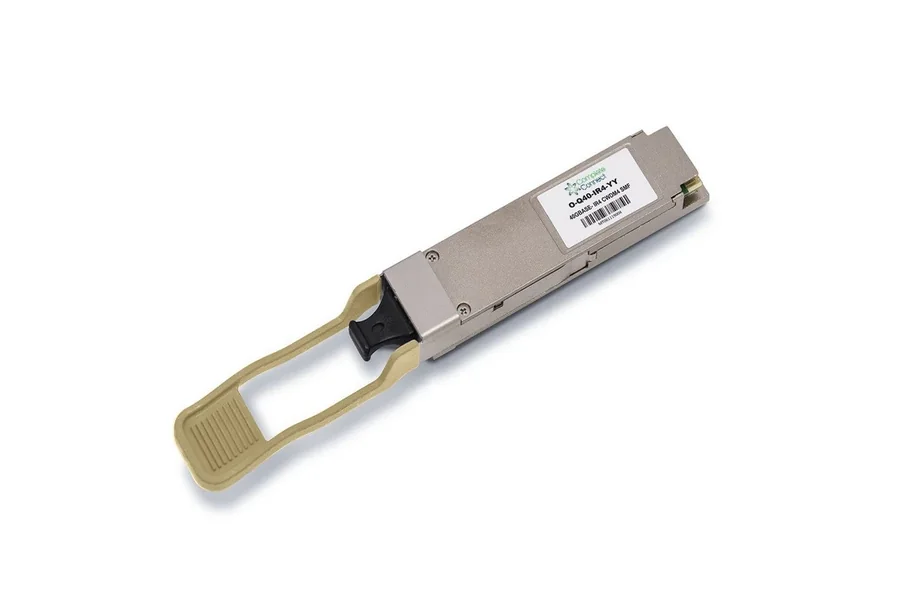
40GBASE-LR4 is built on a mature design. It uses 40G Ethernet, four wavelengths around 1310 nm, multiplexed onto a single pair of single-mode fibers. The technology is not experimental, and it is not aggressively optimized for extreme density or power reduction.
That conservative design philosophy shows up in daily operation. Link behavior is consistent. Optical budgets are forgiving. Vendor interoperability issues are rare compared to newer, more complex standards. Once a 40GBASE-LR4 link is up, it tends to stay up.
From an operations perspective, familiarity reduces risk.
Most network engineers have years of experience working with LR-class optics. They know what failure looks like. They know how performance degrades when fiber quality drops. They know how these modules behave in different switch platforms.
That knowledge is not easily transferable to newer, more complex modules. When something goes wrong at 2 a.m., familiarity becomes more valuable than theoretical performance gains.
40GBASE-LR4 and Interoperability Across Vendors
In multi-vendor environments, subtle incompatibilities can become a recurring headache.
40GBASE-LR4 benefits from long-standing standardization and wide adoption. Most mainstream switch and router platforms support it natively, with minimal firmware tuning or special configuration. Cross-vendor optical links are usually uneventful.
This is not always the case with newer high-speed modules, where firmware versions, coding methods, and power levels can introduce surprises.
Not all long links are metro links. Inside large enterprises, universities, industrial campuses, and hospital systems, internal fiber runs can easily stretch several kilometers.
These links often carry critical traffic between data centers, control rooms, and application clusters. Reliability matters more than raw throughput.
40GBASE-LR4 offers a stable, conservative option for these connections. Its 10 km reach provides enough margin to tolerate real-world fiber conditions without pushing components to their limits.
Power and Thermal Behavior Over Years, Not Months
Power efficiency is often evaluated at purchase time, but its real impact shows up years later.
40GBASE-LR4 modules typically consume less power than 100G equivalents. That difference affects not just electricity bills, but also rack-level thermal density. Lower heat output means fewer hotspots, slower fan speeds, and less mechanical stress on hardware.
Over long operating cycles, these small advantages add up to measurable improvements in hardware lifespan and system stability.
It is true that 40GBASE-LR4 does not deliver the same bandwidth per port as 100G or 400G modules. But in many networks, bandwidth is not the bottleneck.
The real bottleneck is often change management. Every major architectural shift introduces planning overhead, training costs, compatibility testing, and operational risk. Sticking with a well-understood technology can reduce those hidden costs significantly.
From this perspective, choosing 40GBASE-LR4 is less about saving money on optics and more about minimizing disruption across the organization.
When 40GBASE-LR4 Is the Conservative but Smart Choice
There are scenarios where choosing LR4 over 100G is not about budget at all.
In regulated industries such as finance, healthcare, and utilities, network changes often require lengthy approval processes and strict validation procedures. Introducing new hardware platforms or optical technologies can delay projects by months.
In these environments, 40GBASE-LR4 acts as a low-risk building block. It delivers enough performance while fitting comfortably into existing compliance and validation frameworks.
Maintenance, Spares, and Operational Logistics
Long-term maintenance is rarely discussed during initial design phases.
Spare parts availability, compatibility across hardware generations, and long-term vendor support all influence operational resilience. 40GBASE-LR4 modules are widely stocked, easy to source, and supported by most major suppliers.
This simplifies spare strategies and reduces downtime when replacements are needed. In contrast, newer modules sometimes suffer from limited availability or long lead times during supply chain disruptions.
There is a strong industry push toward “future-proof” infrastructure. While this sounds sensible, it often leads to overinvestment.
Not every link needs to scale endlessly. Some connections serve stable workloads that change very slowly over time. In those cases, building in massive excess capacity does not provide meaningful value.
40GBASE-LR4 fits naturally into this category. It supports predictable, long-lived links where stability matters more than upgrade potential.
Technology decisions are not purely technical. They are also psychological.
Teams are more confident deploying technologies they trust. That confidence translates into faster deployments, fewer mistakes, and more proactive maintenance. It also reduces friction between engineering teams and management, who are often wary of high-risk changes.
40GBASE-LR4 benefits from this psychological factor in a way newer technologies cannot.
Conclusion
40GBASE-LR4 is not a relic from a slower era. It is a mature, conservative technology that continues to earn its place in modern networks through stability, predictability, and operational simplicity. For organizations that value risk control and long-term reliability over headline speeds, LR4 remains one of the most rational choices available. In a world that moves fast, sometimes the smartest infrastructure decisions are the ones that move carefully.
