

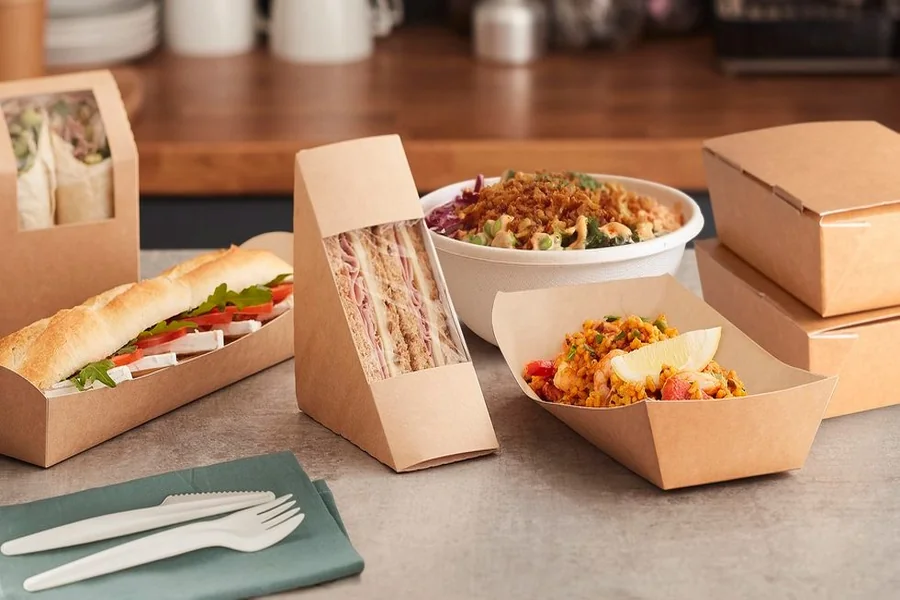
Shoppers today stand at a crossroads every time they reach for a box of cereal or a bag of salad greens: do they reward brands that choose biodegradable packaging or those that promise recyclability? While both approaches aim to shrink our collective environmental footprint, their paths to a greener future differ in science, infrastructure, and real-world performance.
To decide which option truly “wins,” we must examine how each material behaves from cradle to grave—and how those behaviors ripple through supply chains, waste systems, and household habits alike.
Understanding Biodegradable Packaging
Biodegradable food packaging is designed to break down through natural microbial activity into water, carbon dioxide, and biomass. Materials range from plant-based polylactic acid (PLA) to molded fiber and starch blends. In theory, they disappear without a trace, but the fine print matters. Most industrially compostable plastics require high heat and controlled humidity, which only commercial composting facilities provide.
Toss the same fork into a backyard pile, and it may sit intact for years. Still, when matched with proper collection programs, biodegradable packaging diverts organic waste from landfills, reduces methane emissions, and returns nutrients to soil—an elegant loop that mirrors nature’s own recycling processes.
The Realities of Recyclable Materials
Recyclable packaging sticks to the mantra “reduce, reuse, recycle,” extending a material’s life by transforming it into new products. Aluminum cans and PET bottles are poster children, boasting well-established curbside programs and high resale values. Yet recyclability hinges on consumer sorting behavior and municipal budget constraints. Plastic films, multilayer pouches, and wax-coated cartons often slip through mechanical sorters and end up in landfills or incinerators.
Even when collected, contamination—from leftover food to incompatible polymers—can render an entire bale worthless. That said, when recycling loops work, they save significant energy compared with virgin production, preserve non-renewable resources, and slash greenhouse-gas emissions.
Environmental Impact: Waste, Energy, and Carbon
Comparing the two paths means weighing trade-offs across a product’s life cycle. Biodegradable packaging excels at end-of-life performance in regions with industrial composting: it turns grocery waste and its container into valuable compost, eliminating landfill methane. However, some biopolymers demand more agricultural inputs, water, and land than petroleum-based plastics, nudging their overall carbon curve upward unless sourced from agricultural by-products.
Recyclable materials, conversely, score high on energy efficiency when repeatedly cycled, particularly metals and clear PET. But their success rate hinges on the collection and processing infrastructure that many rural or developing areas lack. Ultimately, the lowest-impact choice often depends on local systems: a city with robust curbside recycling might favor PET, while one with advanced composting could see bigger gains from biodegradable fiber trays.
Cost, Convenience, and Future Innovations
Brands making packaging decisions juggle more than emissions statistics; they also face shelf-life demands, transportation costs, and consumer perception. Biodegradable films currently cost more per unit and may offer shorter oxygen barriers, while recycled PET is prone to supply fluctuations tied to bottle-collection rates. Emerging technologies promise to blur these lines. Enzyme-coated paper, chemical recycling of mixed plastics, and refill models are all vying for mainstream adoption.
One breakthrough even ties packaging to manufacturing efficiency: integrating an on-site nitrogen generator with biodegradable film loading extends product freshness without relying on multilayer plastic pouches. As such innovations mature—and as policymakers impose extended producer-responsibility fees—the cost gap between biodegradable and recyclable options will likely narrow.
Conclusion
So, which food-packaging strategy wins? The honest answer is that victory depends on context. Biodegradable materials shine where composting infrastructure is strong, and food waste is abundant, turning trash into fertile soil. Recyclable materials triumph where collection systems, consumer habits, and market demand support multiple reuse cycles.
For brands and consumers alike, the smartest move is to champion local waste solutions, demand transparent life-cycle data, and stay flexible as new technologies rewrite the rules. In the end, the planet benefits less from a single knockout champion and more from a tag-team approach that leverages the strengths of both biodegradable and recyclable innovations.
