

Many people with autoimmune conditions experience “brain fog”: problems with focus, word-finding, short-term memory, and mental stamina that persist even when routine labs look normal. Research increasingly connects this cognitive haze to chronic inflammation and disturbances along the gut–brain axis rather than a purely “in the head” problem.
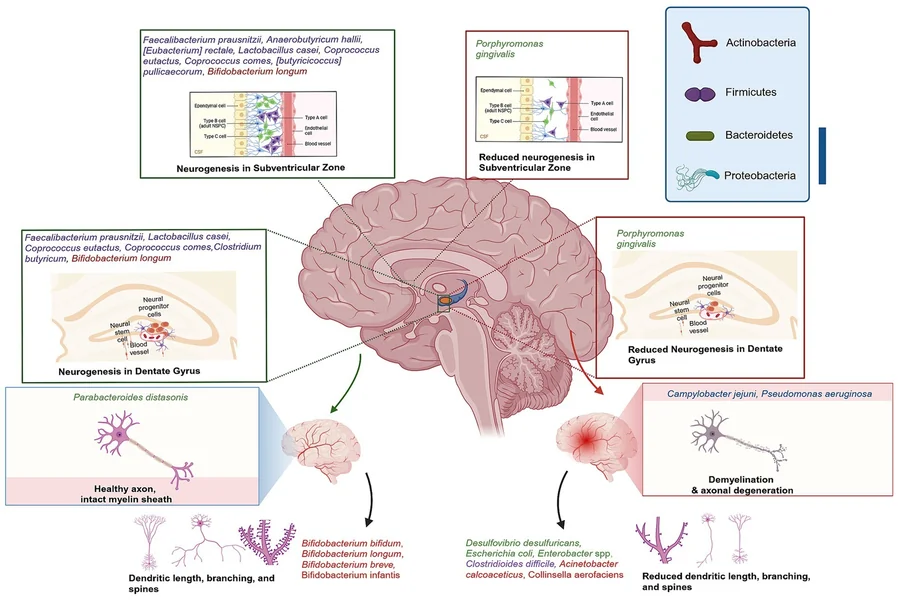
The gut–brain axis is a two-way communication system linking intestinal microbes, immune cells, hormones, and the nervous system. When gut microbes shift toward dysbiosis, they can drive systemic inflammation and alter brain signaling, contributing to neuroinflammation and cognitive symptoms in autoimmune disease.
How Gut Dysbiosis Fuels Neuroinflammation
An imbalanced gut microbiome increases production of pro-inflammatory cytokines and bacterial products such as lipopolysaccharides (LPS). These molecules can enter circulation, disrupt the intestinal barrier, and, in some cases, affect blood–brain barrier integrity, activating microglia and promoting neuroinflammation.
In autoimmune conditions like multiple sclerosis and others with central nervous system involvement, gut-driven immune activation can amplify T‑cell trafficking into the brain and spinal cord. Even in systemic autoimmunity without obvious neurological lesions, low-grade neuroinflammation may manifest as fatigue, slowed processing speed, and difficulty concentrating.
Functional Medicine Approach To Autoimmune Brain Fog
Functional medicine clinics such as Wellfinity, views autoimmune brain fog as a downstream consequence of immune dysregulation, gut imbalance, and metabolic stress. Rather than relying only on stimulants or symptom-focused nootropics, practitioners address root factors such as omega 3 for brain fog, diet quality, microbiome health, sleep, stress, and micronutrient status.
Typical workups consider gut symptoms, infections, blood sugar swings, nutrient sufficiency (e.g., B vitamins, iron, vitamin D), and inflammatory markers. The therapeutic roadmap then combines gut-directed care, anti-inflammatory nutrition, and targeted brain-supportive nutrients to restore clearer cognition over time.
The Role Of Omega-3s And Phospholipids In Brain Health
The brain is rich in lipids, and the membranes of neurons and synapses depend heavily on omega‑3 fatty acids and phospholipids for fluidity, signaling, and resilience under inflammatory stress. Docosahexaenoic acid (DHA), in particular, is a critical structural component of neuronal membranes and supports synaptic plasticity and neurotransmission.
Reviews of omega‑3 supplementation show that adequate intake can slow cognitive decline and support certain domains such as memory and processing speed, especially when introduced before advanced neurodegeneration. These benefits likely stem from a combination of anti-inflammatory effects, improved membrane function, and modulation of signaling pathways involved in neuronal survival.
Omega-3s, Autoimmunity And The Gut–Brain Link
Omega‑3 fatty acids also influence the gut–brain axis by modulating immune responses and gut microbiota composition. They can reduce production of pro-inflammatory cytokines, support regulatory immune pathways, and alter microbial metabolites that reach the brain via circulation.
This dual action—direct support of neuronal membranes plus indirect calming of gut-driven inflammation—makes omega‑rich protocols especially relevant for autoimmune brain fog. For patients, this translates into a strategy that aims to quiet the inflammatory noise while giving brain cells the structural lipids needed to function optimally.
Why Phospholipid Forms Matter
Not all lipid supplements are equivalent. Phospholipid-bound omega‑3s and related compounds can integrate efficiently into cell membranes and may have advantages for neuronal uptake and membrane stabilization. Plasmalogen-related lipids, for example, are being studied for their roles in chronic inflammatory and neurodegenerative conditions linked to membrane disruption.
For people with autoimmune brain fog, combining omega‑3s with phospholipids and supportive antioxidants can offer a more comprehensive membrane-support strategy than omega‑3s alone. This combination targets oxidative stress, preserves membrane integrity, and supports microglial balance, all important for clearer cognition.
A Targeted Brain–Heart Lipid Complex As An Adjunct
In practice, Wellfinity’s functional medicine practitioners in Mumbai often leverage a phospholipid-rich omega complex as part of the plan for autoimmune brain fog, especially when cardiovascular health is also a concern. These formulas typically combine algae- or fish-derived omega‑3s with phospholipids and antioxidants to support both neuronal and vascular integrity.
Within your content, you can describe this generically as a “phospholipid-rich omega complex for brain and heart support” and link that phrase once to your dedicated brain–heart support product page. This keeps the article educational and non-branded on the surface while guiding readers toward a formula specifically designed to support cognitive clarity and cardiovascular function in inflammatory conditions.
Integrating Lipid Support With Gut And Lifestyle Work
Lipid-based support should sit on top of, not replace, foundational gut and lifestyle interventions. Anti-inflammatory, fiber-rich diets, reduced ultra-processed foods, and attention to blood sugar stability all help reduce the inflammatory drivers of brain fog.
Simultaneously, optimizing sleep, managing stress, and addressing physical inactivity support neuroplasticity and mitochondrial health, making the brain more responsive to nutritional strategies. In this context, a phospholipid-rich omega complex acts as a precision tool layered onto a broader gut–brain healing framework rather than a stand-alone fix.
Measuring Improvement In Autoimmune Brain Fog
Because brain fog can be subjective, tracking is important. Patients can monitor changes in focus, word recall, multitasking, and mental stamina in daily life while clinicians may use simple cognitive tests or questionnaires at intervals. Improvement often correlates with reductions in gut symptoms and inflammatory markers when the gut–brain axis is successfully addressed.
Over time, combining gut-focused care, anti-inflammatory nutrition, lifestyle alignment, and a targeted brain–heart lipid complex can shift autoimmune brain fog from a constant burden to an occasional, manageable symptom.
